Bring important knowledge back
Regular review and retrieval were associated with helping pupils revisit learning and retain key knowledge over time.
Dissertation · Teaching & learning
What can Rosenshine’s Principles offer pupils learning at Key Stage 5? A research feature on the questions, findings and classroom implications.
01The study
A critical study of Rosenshine’s Principles and their impact on enhancing pupil learning in KS5.
Rosenshine’s Principles are often discussed as a practical guide to effective instruction. My dissertation examined how these ideas are understood and used in post-16 classrooms, and what pupils and teachers said about their contribution to learning. The focus was on retention, understanding and the development of pupil independence.
02How I explored it
The study used a mixed-method case study in a post-primary school in Northern Ireland. Pupil questionnaires, semi-structured teacher interviews and a pupil focus group brought together different perspectives on instruction and learning in KS5.
03What emerged
Swipe to explore →
Regular review and retrieval were associated with helping pupils revisit learning and retain key knowledge over time.
Modelling, small steps and guided instruction helped pupils make sense of challenging material and build understanding.
Structured support could strengthen confidence, while teachers also highlighted the need to help pupils become more independent.
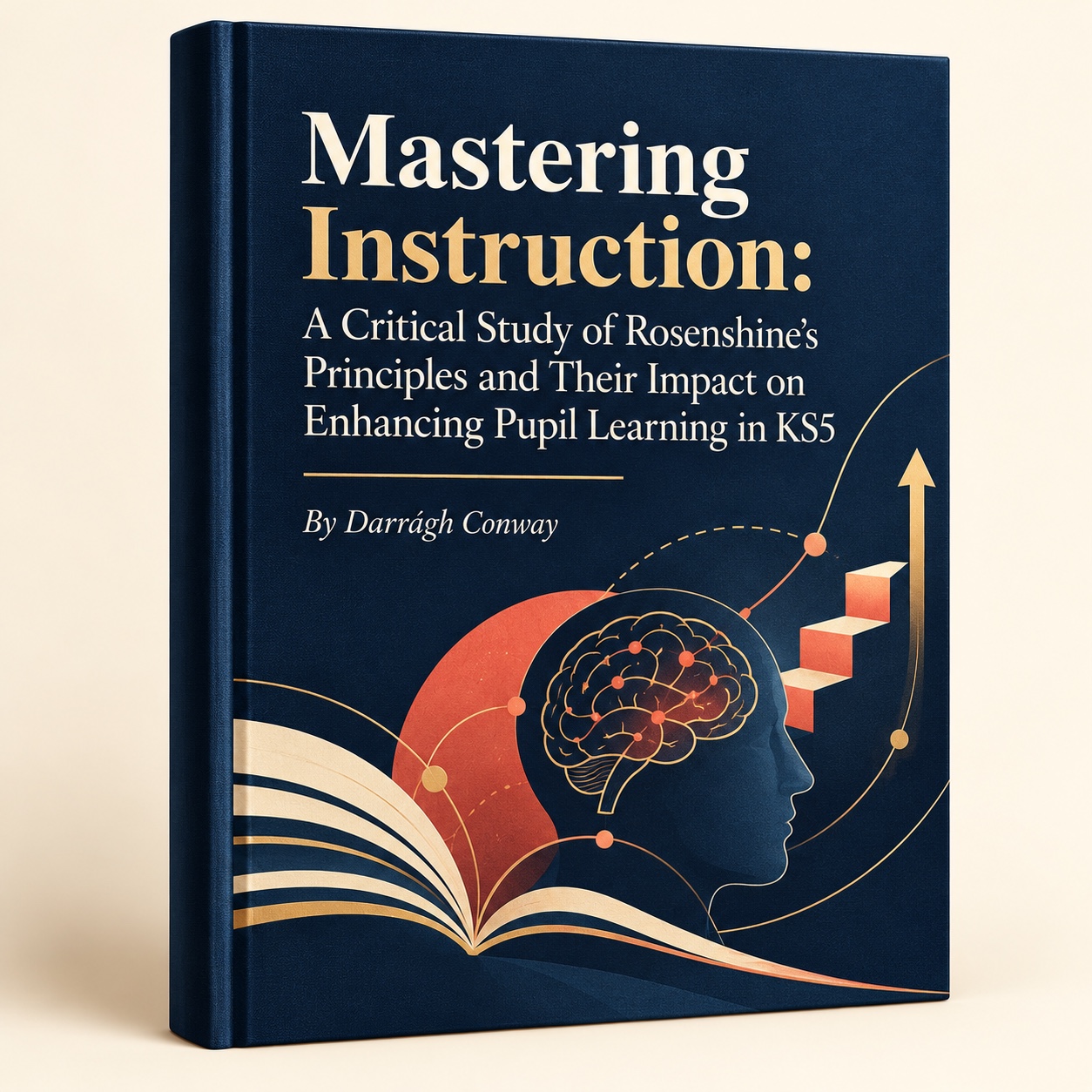
04The full dissertation
Explore the full dissertation, including the literature review, research approach, findings and discussion.
05A considered conclusion
The findings suggest Rosenshine’s Principles can support KS5 learning when used thoughtfully and flexibly. Their application varied across subjects and was shaped by time, context and the balance between teacher guidance and pupil autonomy.
This was a case study in one school, so its findings offer a close view of a particular context rather than a claim that one approach works identically everywhere. The central message is to use evidence with professional judgement: teach clearly, check what pupils understand and adapt support as learners grow.